

Mini Cart

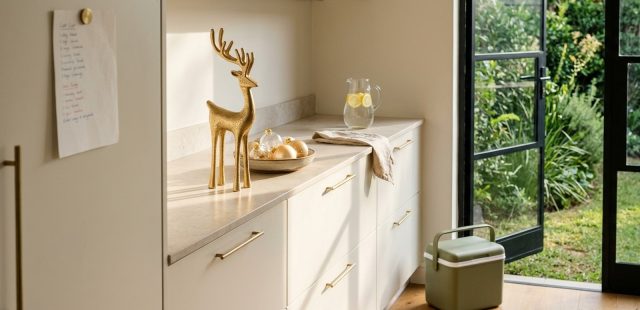
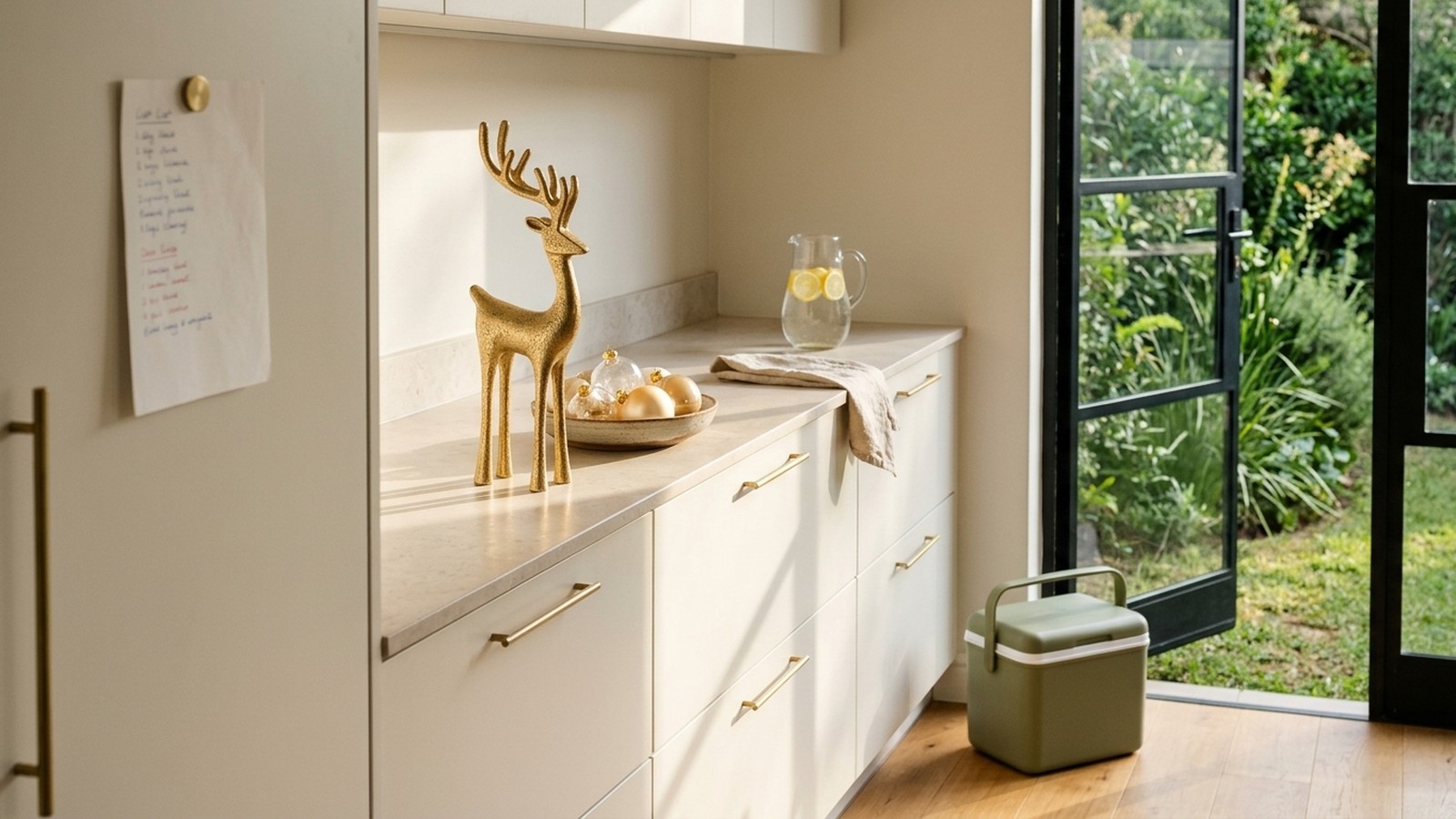
A handwritten Black Friday shopping list on a fridge door in a sunny kitchen, with a gold reindeer and baubles on the counter and a cooler box by the open garden door

It is Black Friday week in a Pretoria kitchen, and the phone on the counter will not stop buzzing with specials. On the fridge door, held up by a magnet, is a list in three different hands. Someone has written chairs for the patio. Someone else wants something to keep the kids busy in the holidays, then boxes for the garage. In capitals at the bottom is the reindeer that broke last year. That list is your Black Friday shopping list, and it deserves one well-planned shop rather than ten rushed ones. Our Winning Summer Deals have been running since 13 November. They carry on until 13 December 2026, while stocks last, and some items are at selected stores only. We have done the sums on them for you, in rand.

Write Your Black Friday Shopping List First

Start with the list itself. In an EWN report of 29 October, Sarah Nicholson of JustMoney put it simply: “Write down what you need, what you can afford, and what is the maximum you’re prepared to spend.”

So give your Black Friday shopping list five headings for the next six weeks: outside, the kids, storage, a piece of furniture and Christmas. Under each, write what your household will use this summer, not only what happens to be on special. Then write one figure at the top for the whole shop, and keep to it.

Our Winning Summer Deals run until 13 December, so there is no need to race against Friday. Each deal is while stocks last, though, so the things on your list are worth buying sooner rather than later.

Summer Outside: Seats and Cold Drinks

The patio comes first on that fridge-door list: summer is long Sunday lunches outside. A Verona square table for four is R799, and a Clifton armchair, in Taupe, Charcoal or White, is R259. Four chairs come to R1,036, so the table and chairs together are R1,835, about R245 less than their usual prices. The Verona tables, square and rectangular, are in our tables and chairs range.

For days at the pool or the park, a Tropica folding beach chair from our Summer Promo and a 25L Pride cooler box for the drinks are R199 each.

The Kids’ Holidays at Home

The school holidays mean weeks at home, and a corner of the garden can carry a good many of those days. Our Sunny Shell Pit, R199 in several colours, is ideal for a sand pit or a play den, and our play sand is R99 for a 20 kg bag.

For the hot afternoons indoors, give them a table of their own for drawing and puzzles. A Kids Table is R299, and two Kiddies armless chairs at R59 each bring it to R417. The play sand and chairs are both in our Kids Play and Learn range.

Is a playhouse on the list? Ours is R2,499, R400 less than usual, and it is one to measure for before you buy. It measures 140 cm long, 115 cm wide and 109 cm high. Mark out about 1.4 m by 1.2 m of lawn or patio first, with room around it for small people to run in and out. You will find it under Imaginative Play.

Storage Multi-Buys: Where Each Box Costs Less

After the holidays, the Christmas decorations and the beach and pool things both need a home, and this is where our multi-buys earn their place. Count the boxes your list needs first, then divide, and set the price of each box against the single price the leaflet prints beside it.

  • Clear 70L rolling box: two for R549.99, against R299.99 for one. That is about R275 a box, or about R25 less each.
  • Clear 90L rolling box: two for R599.99, against R349.99 for one. That is about R300 a box, or about R50 less each.
  • 30L Rough Tote: three for R299, against R109.99 for one. That is just under R100 a tote, about R10 less each.

Of the two clear rolling boxes, the bigger one gives the bigger saving on each box. The 90L box takes clothing, bedding, toys, shoes and seasonal things, and the Rough Tote holds tools, hardware and seasonal decorations. Both rolling boxes are in our clear storage range.

A Homework Corner Ready for January

January brings a new school year, and with it the homework. Our Winning Summer Deals take 10% off flatpack furniture, chairs excluded, at selected stores and online, so now is a good time to set up a corner for it. The Loft desk has a natural wood-look top with a raised edge along the back and sides, on angled black metal legs, with room for a laptop and stationery. Beside it, the three-tier Loft shelf in the same wood-look finish takes the books, a plant and a storage basket or two. Each is R1,170 with the 10% off, so the pair comes to R2,340, about R260 less than usual.

If the bigger wish is a dining table, our Fern, Lava and Drift tables are 10% off as well, at selected stores and online. That brings the Lava and Drift to R2,700 and the Fern to R3,150. Our article on fitting a dining table for 6 has their sizes.

Add Christmas to Your Black Friday Shopping List

Christmas is a month away, and the reindeer on the fridge door has not been forgotten. Our gold standing reindeer is R199.99 at 22 cm and R299.99 at 35 cm. Stockings, hanging decorations, crackers and serviettes for the table are in the same Christmas range, all at their everyday prices. In January, they go back into those totes.

Then there is the car. Spend R750 or more in one transaction at any Mambo’s store between 23 October and 15 December 2026, and you can enter our draw for a Suzuki Swift 1.2 GL Auto. Write your name and your contact number or email address on the back of the till slip and drop it in the store’s entry box. Or enter on our win a car page with a photo of the slip, where you will also find the full rules. If your list comes to R750 or more anyway, buy it in one go at the store, so that its till slip qualifies.

Take Your Black Friday Shopping List to Our Gauteng Stores

The list on the fridge door now has its sums written beside it. Add them up and check the total against the figure at the top before you leave home. Our Winning Summer Deals are valid until 13 December 2026, while stocks last. Some items are at selected stores only, so it is worth asking your store first. Our store locator shows our four Gauteng stores: Irene in Centurion, Alberton, Midrand (Mushroom Farm) and Castle Gate in Pretoria. Come Christmas Eve, this year’s reindeer will be standing on the shelf.
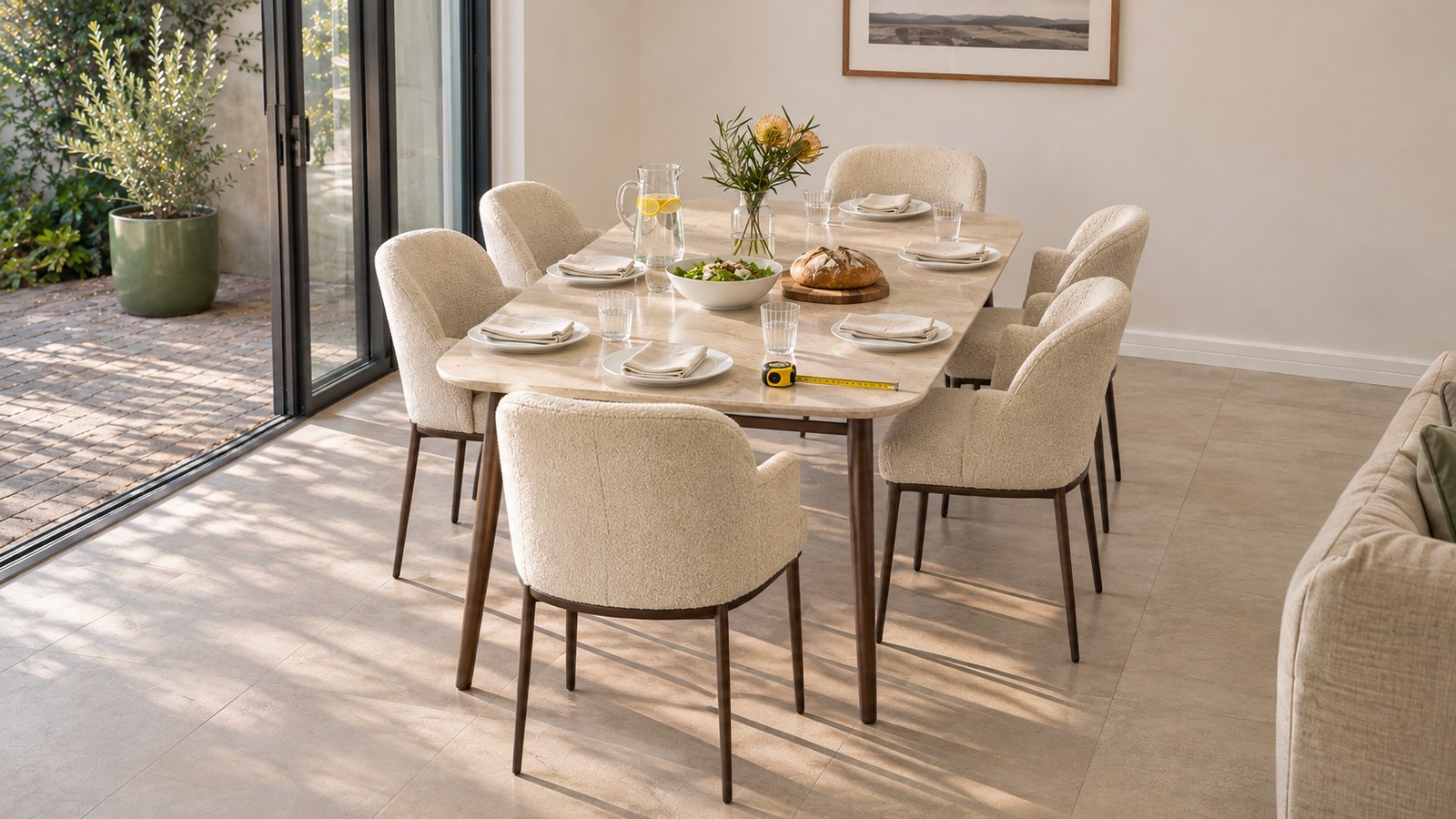
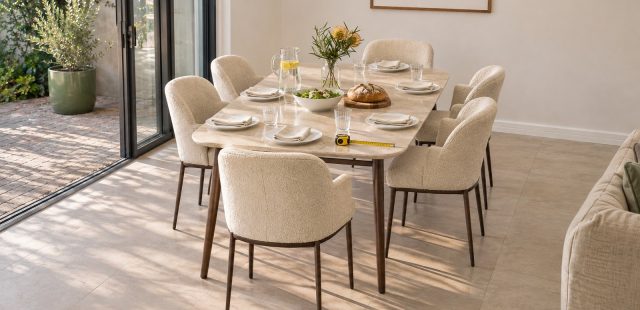
A dining table for 6 laid for Sunday lunch in the dining corner of a townhouse, with two chairs on each side and one at each end

Six are coming for Sunday lunch. Picture a townhouse in Midrand, where the dining corner is the stretch of floor between the couch and the kitchen counter. Before you choose a dining table for 6, fetch the tape measure, because the table has to fit twice. Six people must fit around it, each with room for their elbows. Then the table must fit the room, with space to pull out a chair. Both come down to a few simple sums, and we have done them on our own dining pieces.

How Much Table Does One Person Need?

About 60 cm of table edge, according to Houzz’s guide to choosing a dining table. Treat that as the least. Dimensions.com calls 76 cm the optimum for a place setting, which is the difference between eating and eating while passing the potatoes. Houzz also suggests a table at least 90 cm wide, so that dishes fit down the middle. All three of our dining tables are exactly that.

The 150 cm Dining Table for 6: Two a Side, One at Each End

Our Fern Dining Table, with its ivory top on mocha brown legs, and our black Lava Dining Table are the same size: 150 cm long, 90 cm wide and 75 cm high.

Divide a 150 cm side by 60 cm a person and you get two and a half people, so seat two. Each then has 75 cm, a whisker under the optimum. One more sits at each 90 cm end, and that makes six, all with more than the 60 cm.

Could a third person squeeze in along a side? Three would get 50 cm each, well under the 60 cm the guides give. The chairs agree. Our Fern Dining Chair, in Ivory or Olive, is 54 cm wide. Two take up 108 cm of the side and leave room to get in and out. Three would need 162 cm, more than the side has. The seat of our Lava Dining Chair is narrower, at 45 cm, but the person on it still needs their 60 cm of table. Two a side suits both tables best.

The 160 cm Dining Table: Room for 6 and Their Elbows

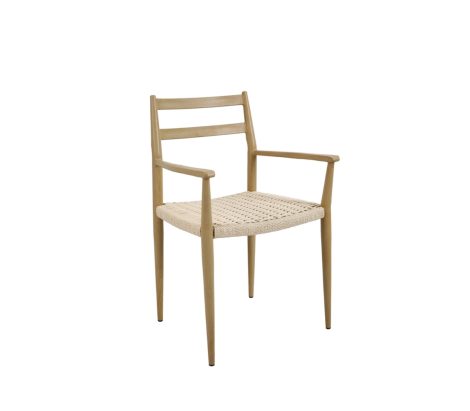
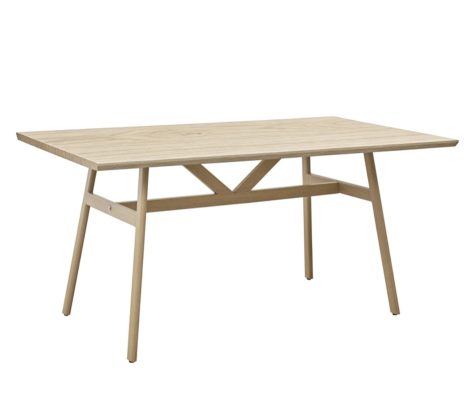
What does another 10 cm buy you? Not more seats, but more room for each one. Our Drift Dining Table, in Sand, is 160 cm long, 90 cm wide and 75 cm high. Two people along a side now have 80 cm each, more than the optimum. Three would still get only about 53 cm, and three Drift Dining Chairs, at 55 cm wide, would need 165 cm.

So the Drift seats six, not eight. For anyone who talks with their hands over lunch, that is 10 cm well spent.

Three Dining Tables, Three Looks

The sums say all three seat six, so the choice comes down to the look and the feel of the chair. The Fern is the soft one, with an ivory top on mocha brown legs. Its chairs are padded at the seat and the back and covered in fabric, in Ivory or Olive. The Lava is dark throughout, a charcoal top on a black powder-coated metal frame, and its chairs are padded and fabric-covered too. The Drift, in Sand, has a matt painted top. Its chairs have a seat of knitted paper rope, on legs with a wood pattern finish. It also has those extra 10 cm.

Bench or Chairs?

A bench looks as though it should seat more. At this size, it does not. Take the Lava Bench, which is 120 cm long, 40 cm deep and 45 cm high, with no back. At Houzz’s 60 cm a person, 120 cm seats two adults, the same two as the chairs it would replace. Set in the middle of a 150 cm side, it stops 15 cm short of each end, clear of the people sitting there.

What a bench can change is the floor between meals. Our dining chairs stand 79 cm (Fern), 82 cm (Lava) and 85 cm (Drift) high. All are taller than a 75 cm table, so a chair’s back always stays at the table’s edge. A bench that is 45 cm high could go underneath, but only if the table leaves it room. Before you count on that, measure two things on the table. The gap between its legs along the side must be more than the bench is long. The clear height under the top must be more than the bench is high.

Chairs, on the other hand, give everyone a back to lean on through a long lunch. A corner you walk through every day may suit a bench along one side, with chairs opposite and at the ends. Long Sunday lunches suit chairs all round.

The Floor a Dining Table for 6 Needs

The floor is the part a small room decides. Around the table, everyone needs room to pull out a chair and sit down. The National Kitchen and Bath Association in the United States, in its planning guidelines for seating areas, recommends just over 80 cm from the table’s edge to a wall or anything else behind the seat, where nobody walks past. Where people do walk behind someone seated, it recommends about 110 cm. Houzz suggests 100 to 120 cm for ease. These are guides, not rules, but they are a good place to start.

For a 150 cm table with six seated, just over 80 cm all round comes to a clear floor of about 3.2 m by 2.6 m. With a full metre all round, it is 3.5 m by 2.9 m. The Drift needs 10 cm more in length. If the way to the kitchen runs behind one long side, allow the wider space there, which makes the floor about 2.9 m across.

Is your corner smaller than that? Then let a wall do some of the work.

  • One end against the wall: five sit every day, two a side and one at the open end, in about 2.4 m by 2.6 m.
  • One long side against the wall: four sit every day, two along the open side and one at each end, in about 3.2 m by 1.8 m.

Either way, when all six come, pull the table out into the room for the afternoon.

Tape It Out This Weekend

Mark your rectangle on the floor with masking tape and leave it there for a day or two. Walk around it, and pull an imaginary chair out on each side. You will soon know which dining table for 6 suits your corner, and whether a bench belongs in it.

The tables and chairs are in our furniture range, and our store locator shows our four Gauteng stores: Irene in Centurion, Alberton, Midrand (Mushroom Farm) and Castle Gate in Pretoria. Then, come Sunday, all six sit down with room for their elbows.

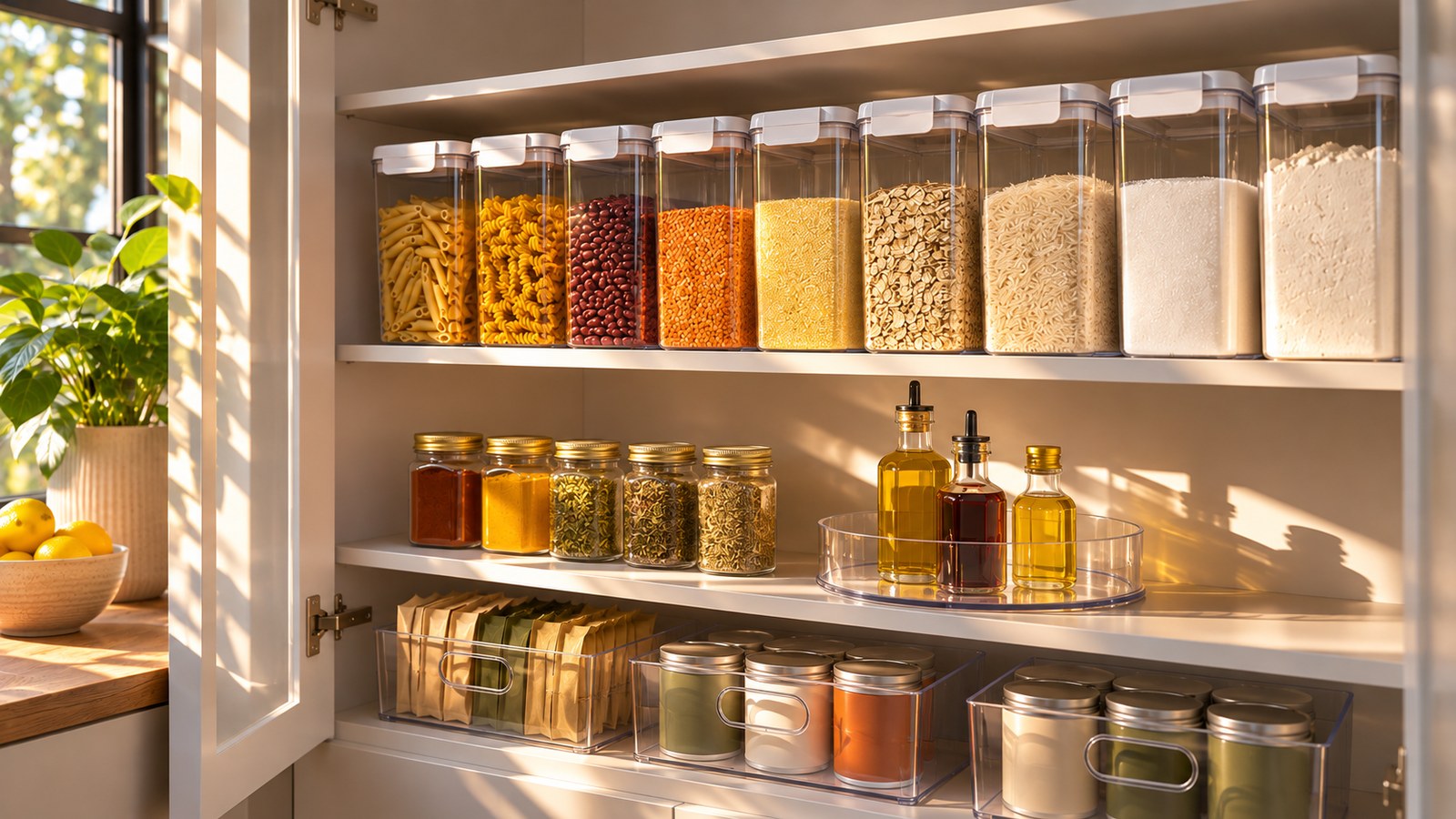
An organised pantry cupboard in morning sun, with dry staples in clear airtight containers, spice jars, oils on a turntable and tins in clear bins

You open the pantry cupboard for baking powder and find two tins of it, both opened. Behind them hides a tin of pilchards you forgot you had, and a packet of rice has tipped over and spilt across the shelf. Sound familiar? There is room enough; the trouble is you cannot see the back. Here is how to organise a pantry in six simple steps, so every tin and packet is in plain sight and within reach.

Start Fresh: Empty the Pantry and Check the Dates

Take everything out and pop it on the counter or the kitchen table. Seeing it all at once shows you what you really have, and leaves you a bare cupboard to clean. Brush or vacuum the crumbs out of the corners, wipe the shelves with warm, soapy water, and let them dry completely.

Next, the dates, and what they really mean. The City of Cape Town explains that a best-before date generally applies to food that does not need a fridge, which covers most of a pantry. The use-by date is the critical one, and it belongs mostly to food kept in the fridge. The City also suggests trusting your senses: sight, smell and touch tell you a lot about whether food is safe.

Give the tins a once-over as well. Food safety experts advise throwing away any tin that is swollen, bulging or leaking, heavily rusted or deeply dented, or has a deep dent on any seam. A little surface rust that rubs off with a finger is nothing to worry about.

As you go, set aside opened packets and anything close to its best-before date, to use first. Duplicates, like that second tin of baking powder, get a pile of their own. Use them up before you open anything new, and leave them off the next shopping list. That pile is also a handy clue to what your household tends to buy twice.

Organise Your Pantry the Way You Cook

Organise what is left in the pantry by how you use it, not only by what it is. Breakfast things live together: cereal, oats, tea, coffee and Rooibos. Baking gets a corner of its own, with cake flour, icing sugar, baking powder and cocoa. Weeknight suppers make a third group: rice, pasta, maize meal and stock cubes, with the tins that go with them. Oils, vinegar and sauces make a fourth, and lunchbox snacks a fifth.

Now a meal or a bake starts with one group instead of a hunt along every shelf. You notice straight away when something runs low, because its group looks thin. Sunday roast in your house? Its gravy powder and spices can have a group of their own. Just keep the groups few enough for everyone at home to remember.

Organise Your Pantry Shelves by Reach

The shelf at eye level and the one just below are where your hand goes without thinking. Save them for the everyday favourites: tea, coffee, sugar and cereal.

Heavy things go low. A big bag of maize meal or a stack of tins is far easier, and safer, to slide off a low shelf than to lift down from overhead.

Children at home? Give their lunchbox snacks a low shelf or a bin of their own. They can help themselves, and anything you would rather they left alone can live higher up.

The top shelf is for the things you need a few times a year, like birthday cake decorations.

Decant What Deserves It

Decanting is worth it for dry staples whose packets will not close once opened: flour, maize meal, sugar, rice, pasta and cereal. Tins and sealed bottles are already closed, so moving them gains you nothing.

Only now do you know what needs a container, so this is the time to choose them. Measure each shelf’s depth and the height between shelves first. Our airtight food storage containers come in glass and stackable plastic, in plenty of sizes, so you can match each one to its shelf and to the amount you usually buy. Square and rectangular shapes stand neatly side by side without the gaps round ones leave, and a row of clear containers makes the cupboard a pleasure to open. For spices and smaller amounts, glass jars with tight-fitting lids work beautifully.

Two habits make decanting work. First, keep what the packet tells you. Copy the best-before date onto the container’s label, and cut out the cooking instructions and any allergen warning to tape on the back. Second, never tip new flour on top of old. Pest specialists advise against mixing old and new food, and say to clean a container before refilling it. Keep the new packet closed beside the container until the old flour is finished, then wash, dry and fill.

No More Lost Tins at the Back

A deep shelf hides its back row, and that is exactly where tins slip past their dates unseen.

Pop loose packets, like soup, gravy and yeast sachets, into a bin you can slide out by its handle. A clear one shows you what is inside at a glance. Bottles of oil, vinegar and sauce sit happily on a turntable, or Lazy Susan, in a corner or at the back, where one turn brings the back to the front. A clever trick for tins: a tiered rack lifts each row above the one in front so every label shows.

Our clear storage includes nifty bins with handles from 4.5 to 11.5 litres, and a four-compartment organiser for smaller sachets. You will find turntables among our pantry ideas. Measure the cupboard’s door opening too, so each piece fits through it.

Label It, Rotate It, Check Before You Shop

Label every container with what is in it. Cake flour, bread flour and self-raising flour look remarkably alike out of their packets! Mark each bin with its group too, so whoever unpacks the shopping knows exactly where things go.

When you unpack, slide older tins and packets to the front and put the new ones behind. Then, before you write a shopping list, open the cupboard. With the food in groups and the bins clear, a quick look tells you what to buy.

Quick Pantry Tips

  • Keep a sheet of paper on the inside of the cupboard door. Whoever finishes something writes it down, so nothing is bought twice.
  • Snap a photo of the open pantry before you leave for the shops, so you can check it in the aisle.
  • If one item keeps finding no home, give it a bin of its own.

Keep Your Pantry Cool, Dry and Pest-Free

Pantry food keeps best somewhere cool and dry, ideally below about 29 °C, food safety experts advise, and never above or beside the stove, under the sink or in a damp garage. In summer, give your food the coolest, driest cupboard you have.

Pantry beetles, weevils among them, and pantry moths usually arrive already inside a packet from the shop, pest specialists note. A container with a tight-fitting lid stops one bad packet spreading to the rest; plastic bags will not do. If a packet ever shows tiny holes, fine webbing or small beetles, throw it away and check the other packets, opened ones first. Then vacuum the corners and wash the shelves with soap and water. The specialists do not recommend insecticides for pantry pests.

Ants come for the sweet things, so keep sugar, syrup and honey in closed containers, wipe up crumbs and spills, and clear an ant trail with soapy water straight away. It removes the scent the ants follow.

Keep It Up: Organise Your Pantry Little and Often

Once you organise your pantry this way, a few minutes a week keeps it that way. Put back anything that has wandered and wipe up the crumbs. Every few weeks, go through it shelf by shelf, check the dates and use up the tins you have had longest.

Next time you reach for the baking powder, there will be one tin, right at the front, with its date where you can read it.